Trenchless Sewer Repair and Pipe Lining in Tyler
If a camera inspection has found cracks, root intrusion or separated joints in your sewer line, you may be able to fix it without trenching across the yard. Call to be connected with an independent local sewer contractor in Tyler who can explain whether pipe lining, pipe bursting or a conventional dig fits your line.
This line connects callers with independent local contractors. Availability, licensing and the scope of any repair are confirmed with the contractor before work begins.
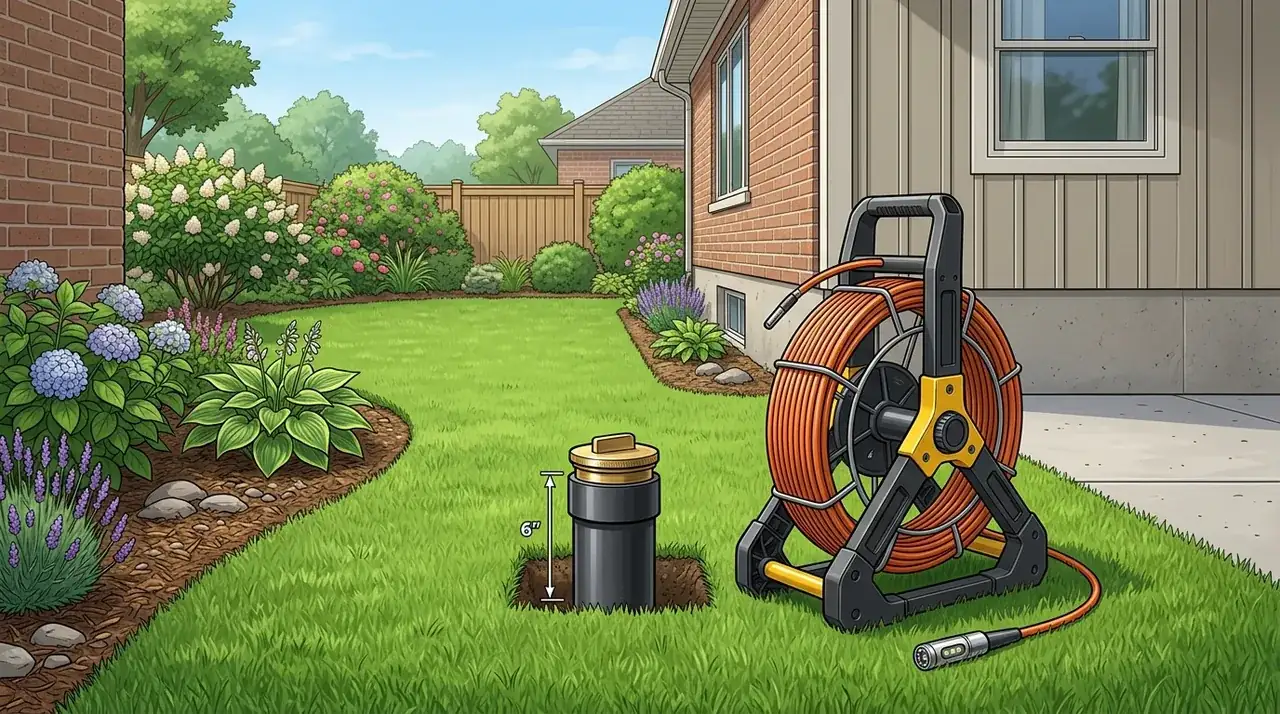 Trenchless work starts with a camera inspection through the cleanout so the contractor can see the pipe's condition.
Signs your Tyler sewer line is failing
A clog that clears and stays clear is a cleaning job. A line that keeps failing usually has a problem in the pipe itself. These are the signs that tend to lead to a repair conversation:
- Backups that come back: The main line clears with a cable or hydro jetting, then backs up again within weeks or months.
- Roots in the line: Root fragments come back on the cable head, or an earlier camera inspection showed roots growing through joints.
- Gurgling and slow drains throughout the house: Several fixtures drain slowly at once, pointing to the main line rather than one branch.
- Wet, sunken or extra-green strips in the yard: A soft spot or depression along the path of the sewer line when it has not rained.
- Sewer odor outside: A smell near the cleanout or in the yard, away from any open drain.
Camera inspection comes first
No one can say whether a line is a candidate for trenchless repair without seeing inside it. A contractor will usually clear the line enough to run a camera from the cleanout, then look at the pipe material, the location and length of any damage, whether the pipe still holds its round shape, and whether there are sags (bellies) where waste settles.
Ask to see the footage or get a copy of it. It shows you what the recommendation is based on, and it is useful if you want a second opinion.
Trenchless options compared
Pipe lining (cured-in-place pipe)
Pipe lining, often called CIPP, is what most people mean by trenchless sewer repair. After the line is cleaned, a flexible liner soaked in resin is pulled or inverted into the old pipe through a cleanout or a small access pit. It is then cured so it hardens into a new, jointless pipe inside the old one. Lining seals cracks and joints that roots have been getting through. It needs the host pipe to still hold its shape, so it suits cracked, root-damaged or corroded lines that have not collapsed.
Pipe bursting
Pipe bursting pulls a new pipe through the path of the old one while a bursting head breaks the old pipe outward. It usually needs an access pit at each end of the run. Contractors may suggest it when the old line is too damaged, or too small, to line. Whether it works depends on the soil, nearby utilities and how the line runs.
Dig and replace
Trenchless methods are not right for every failure. A fully collapsed section, a deep belly, a badly offset joint or a break where the line meets the city tap can still call for excavation or a spot repair. A good contractor will explain why a dig is needed rather than assume one.
Why lines fail in East Texas: clay soil and tree roots
Much of Tyler and Smith County sits on red clay that swells when it is wet and shrinks during dry summers. That seasonal movement stresses buried pipe, opens joints and can leave sections sagging. Older homes around Tyler often still have clay tile or cast iron sewer lines, which crack and corrode with age.
Tyler is also known for its trees. Pine, oak and other mature trees in established neighborhoods send roots toward the moisture in a sewer line, and once a joint opens they grow inside. Clearing the roots restores flow for a while, but sealing the pipe (by lining or replacement) is what stops them coming back.
Settling caused by soil movement is worth asking about specifically. Lining seals a pipe but does not change its slope, so a line with a significant belly may need that section corrected some other way.
Questions to ask the contractor
- What did the camera show? Where the damage is, how long the affected section is, and what the pipe is made of.
- Which methods fit this line, and why? Lining, bursting, a spot repair or a full dig, and why they recommend one over the others.
- What access is needed? Whether the work can go through an existing cleanout or needs access pits, and where they would be.
- Permits and inspection: Whether the City of Tyler or your local jurisdiction requires a permit for the work.
- Plumbing use during the job: How long you will be without drains while the line is worked on.
If sewage is coming into the home now, stop running water and keep people and pets away from the area. Clearing the backup comes first; see sewer line cleaning.
Trenchless sewer repair around Tyler
The line connects callers in Tyler and nearby communities including Whitehouse, Lindale and Bullard. Share your address and ZIP code when you call so you can be matched with a contractor who covers your area. For broken or collapsed lines more generally, see sewer line repair in Tyler.
Frequently asked questions about trenchless sewer repair
Is pipe lining the same as trenchless sewer repair?
Pipe lining is the most common type of trenchless repair. Pipe bursting is another. Both aim to repair or replace a sewer line with less digging than an open trench.
Can every sewer line be lined?
No. Lining needs the old pipe to still hold its shape. Collapsed sections, deep bellies and some badly offset joints may need excavation instead. A camera inspection is how a contractor decides.
Will lining stop tree roots?
A liner forms a continuous pipe without joints, which removes the gaps roots usually grow through. The roots already in the line are cleared before the liner goes in.